This is a workable solution for those who are fermenting in a living space or an apartment and want to absorb bad smells for all types of "smelly" yeast.
Gather Supplies
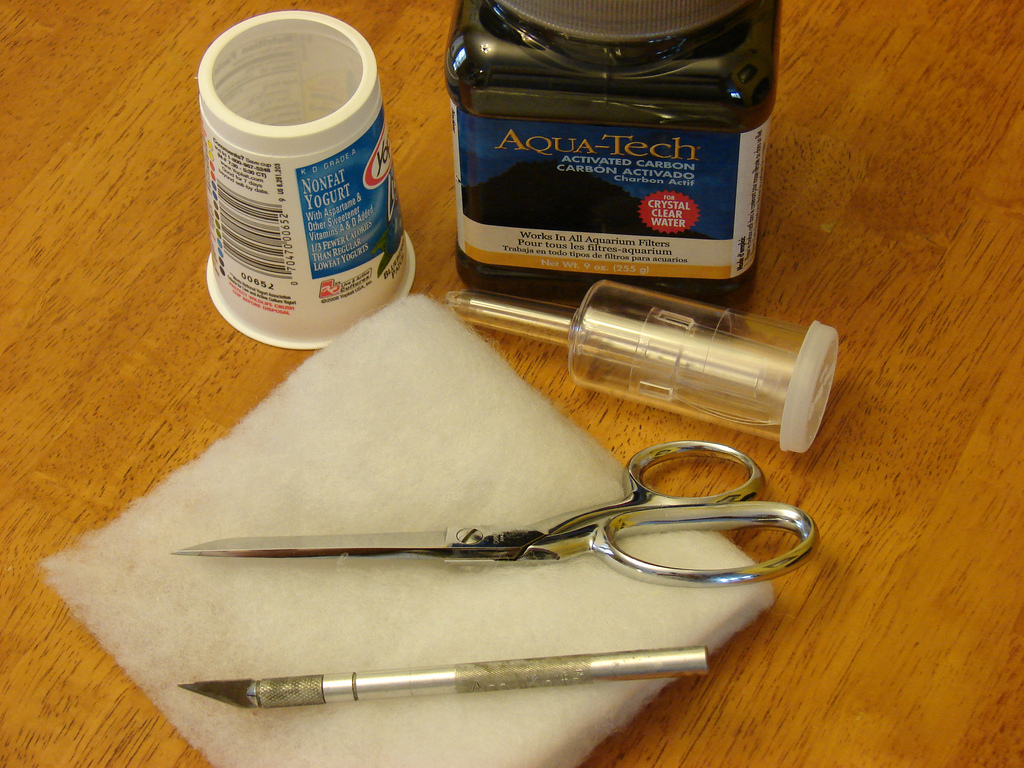
- Activated carbon: available in the pet section of your local home store with the aquarium supplies. The smallest I could buy was 9 oz. for $6.
- Polyester batting from SWMBO's sewing box. You could also use polyfill stuffing or even a scrap of an old cotton towel.
- Yoplait container
- xacto knife or sharp blade
- Sissors
- Airlock
Begin Assembly
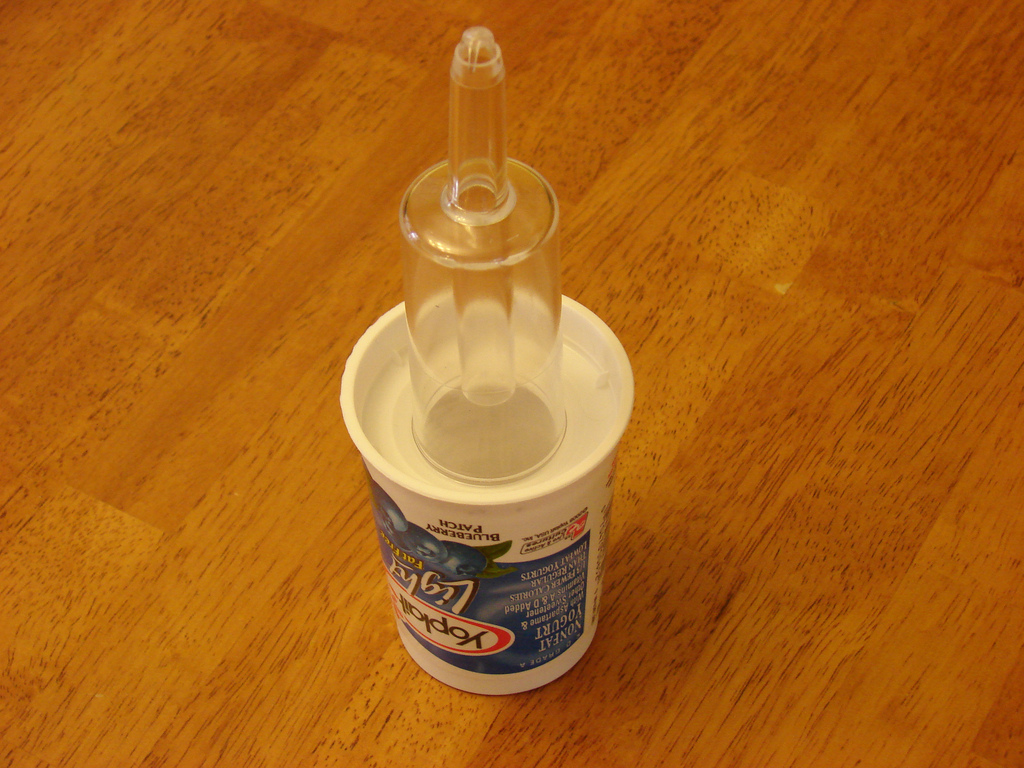
Just by luck, the Yoplait brand cup has a formed circle the exact size to match my fermentation lock molded into the bottom of the cup -- just cut out with xacto knife.
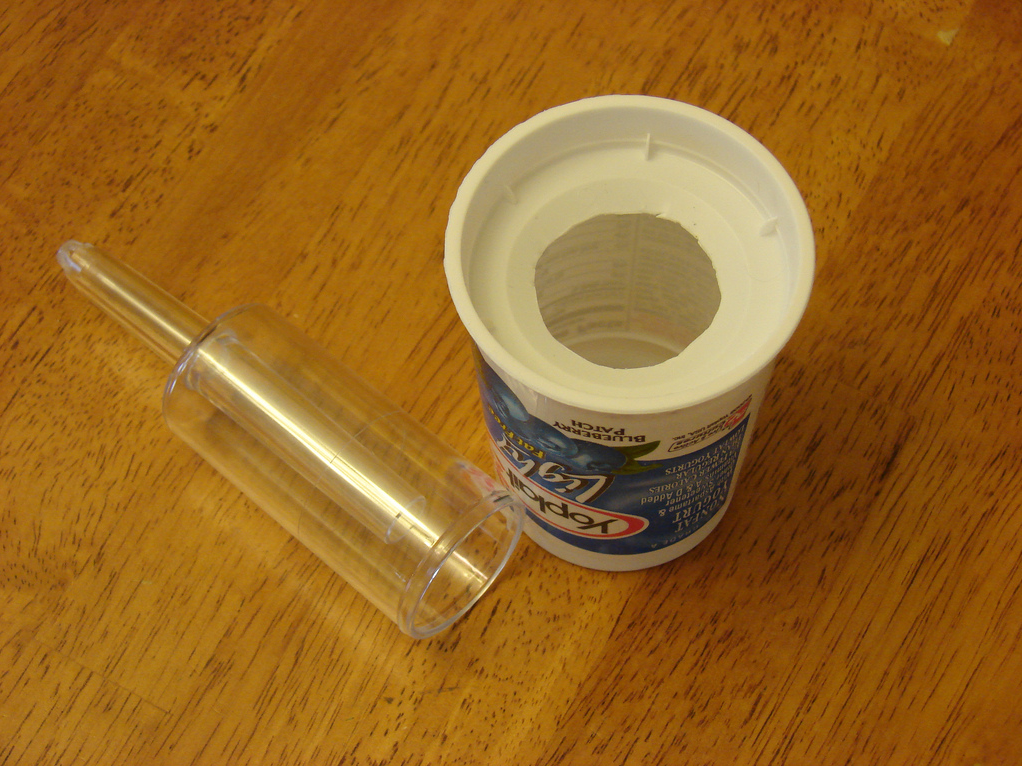
Hole cut to receive the fermentation lock WITHOUT the lock's cap in place.
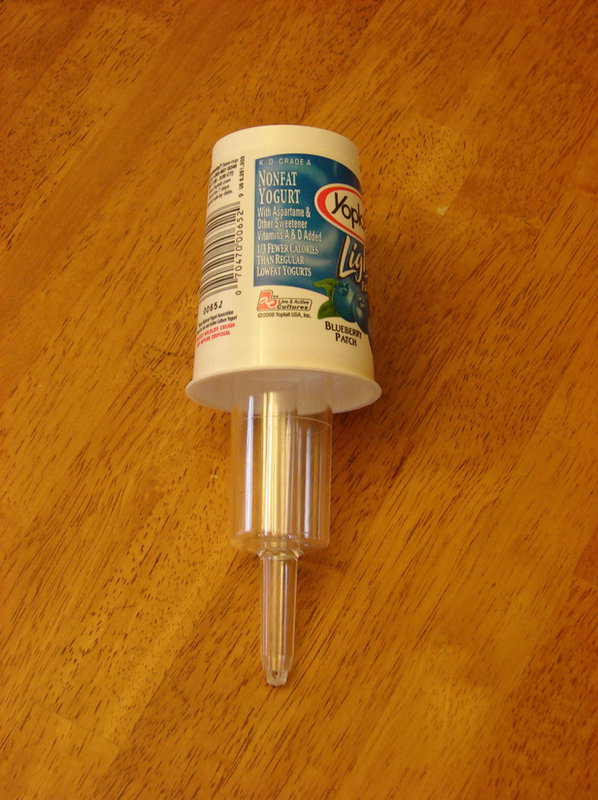
Test fit before you sanitize and fill the fermentation lock.
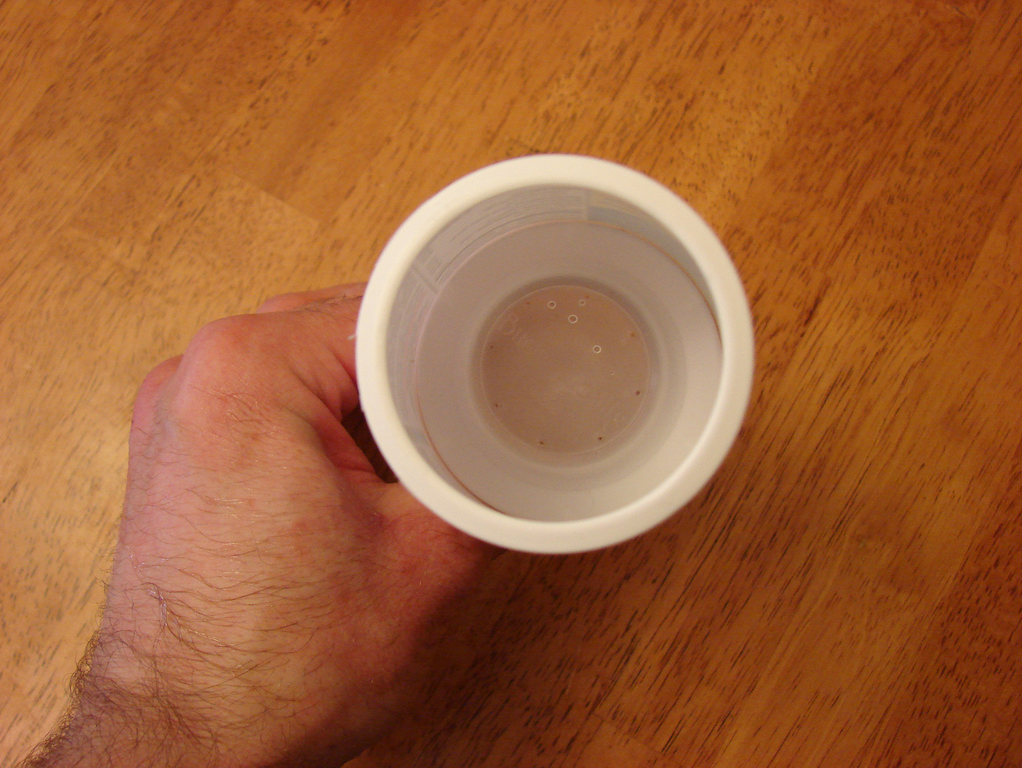
With the lid snapped on the fermentation lock on the inside of the cup, the cup is held firmly in place atop the fermentation lock.
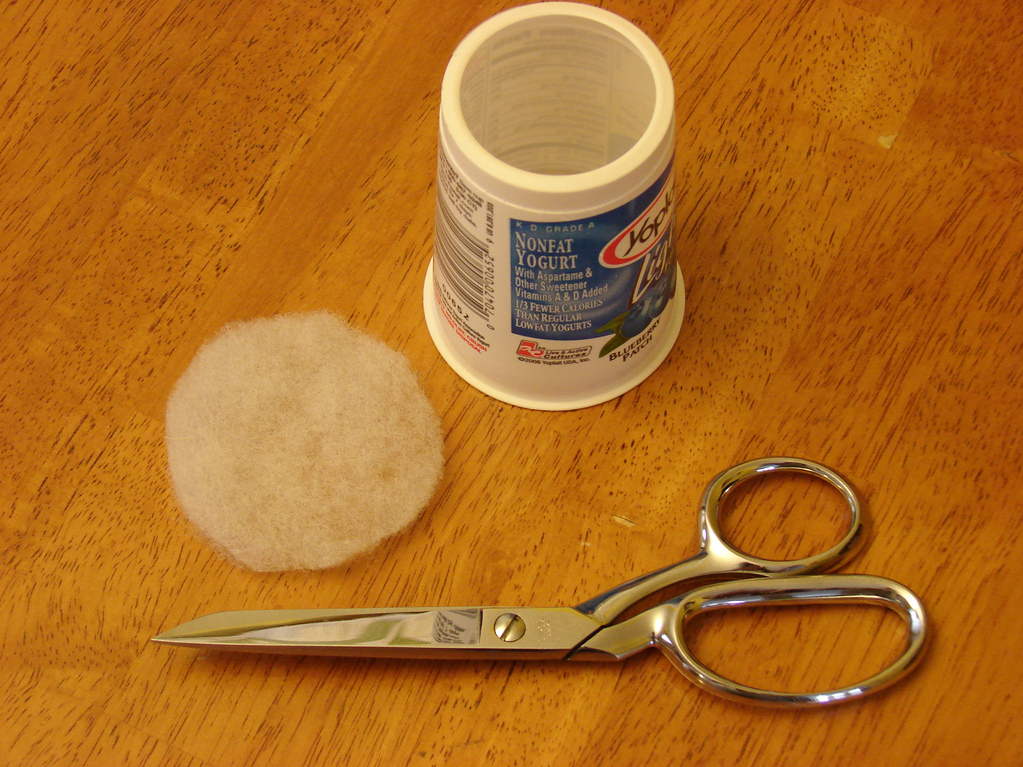
The polyester allows gas to escape through the fibers and acts as a barrier for the carbon. Cut the polyester batting (or cotton rag, or whatever your using) to size.
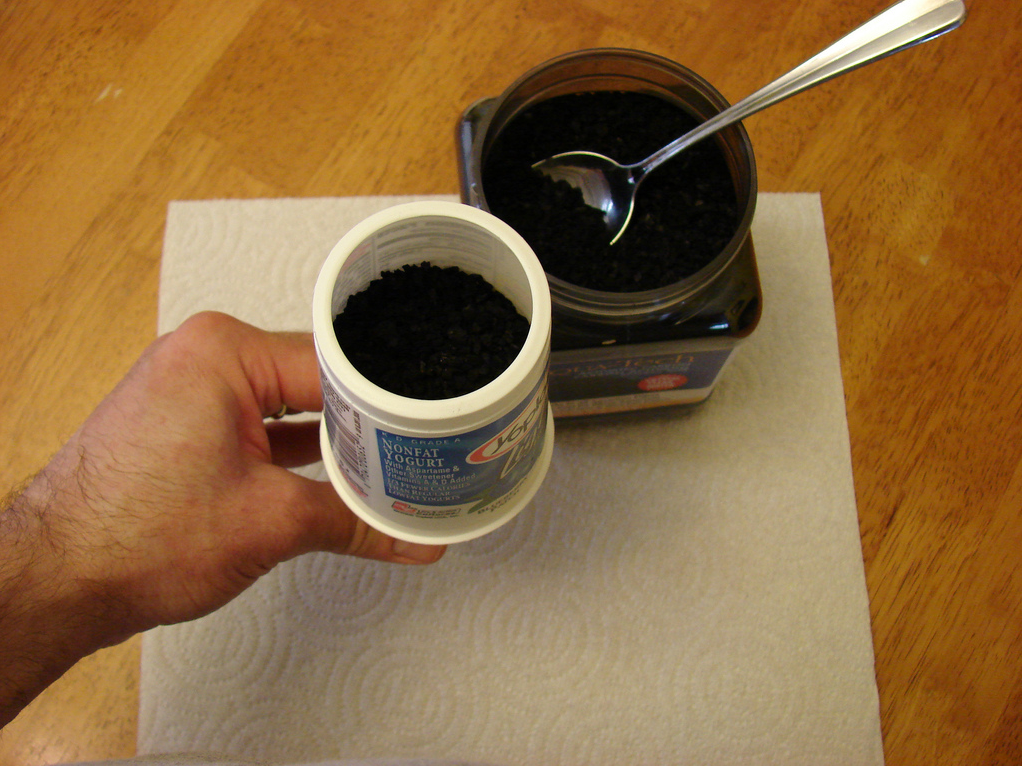
Activated carbon from pet supply area (aquarium section) of your local wally world.
Assemble & Fill Sulfur Gas Filter with Activated Charcoal
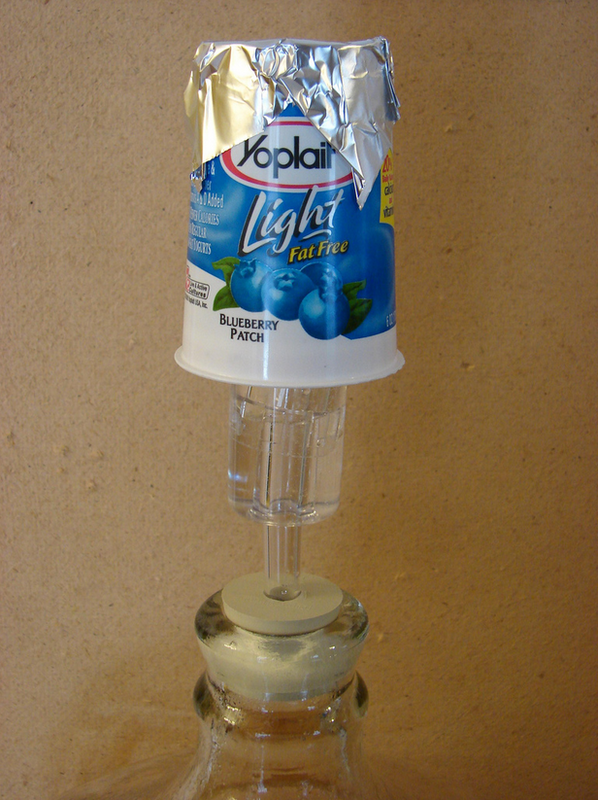
- Sanitize and fill fermentation lock.
- Place into hole cut in cup.
- Snap fermentation lock lid in place.
- Place polyester batting (or whatever you are using) on top of fermentation lock lid at the bottom of the cup.
- Spoon activated carbon into cup -- fill it up.
- Cut a piece of aluminum foil as a lid and poke a few pin holes in it with a push-pin or fork.
- Twist the assembly into the stopper on your carboy.
- Sniff the escaping gas: NOT SULFUR SMELL WOO HOO!!
My filter has been able to fully scrub the sulfur gas for the duration of the 2-4 day period of sulfur emission. However, you may need to replace the activated charcoal with fresh material in order for it to absorb all of the sulfur gas. Another option would be to use a bit larger container that holds more charcoal.
If you liked this guide, please have a look around at the rest of our site. We have written many articles on various homebrewing topics as well as showcased lots of DIY projects from around the web. Everything on the site can be found using the navigation menu at the top-left corner of the page.
Here are a few links to get you started:
Process
Equipment > DIY Projects
Cheers!
[Back To Blog]