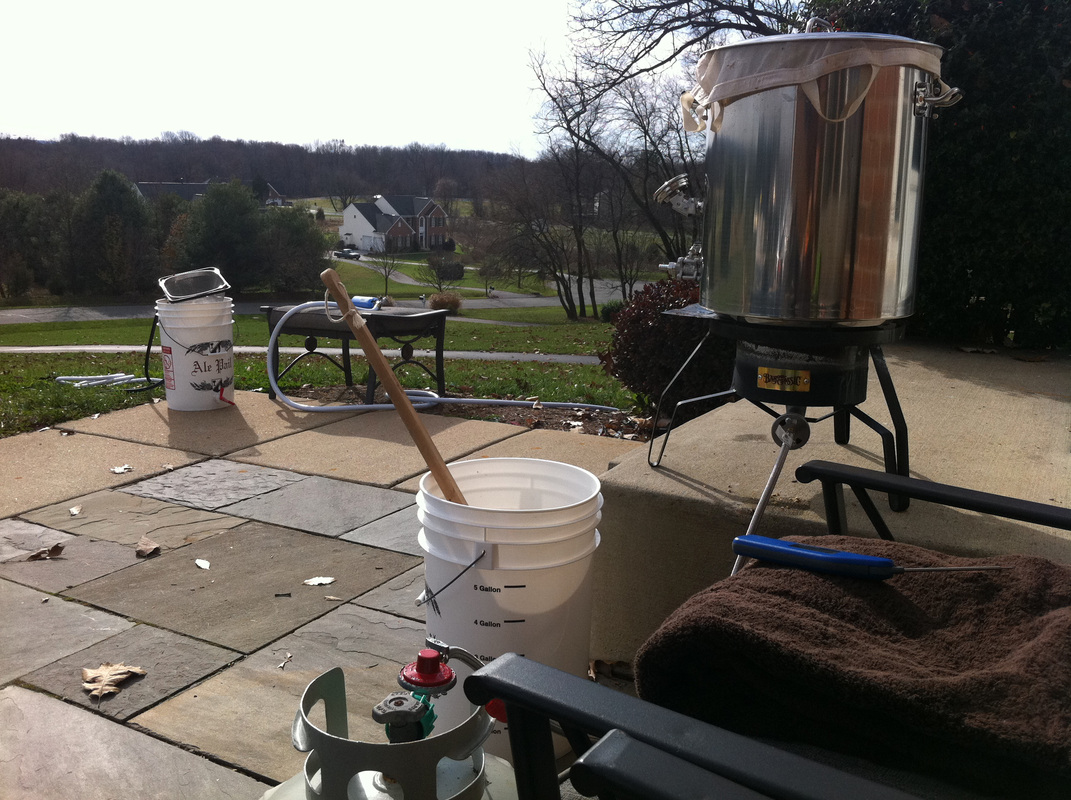
In layman’s terms, BIAB can be summarized as follows: You put a nylon bag in a big pot of water, pour in some grain, heat it to a specific temperature and hold it at that temperature for 60 (sometimes up to 90) minutes. At the end of the mash time, the bag holding the grain is removed and then the remaining liquid (hot liquor) is boiled with hops being added at several stages during the boil. After the boil, the resulting wort is cooled rapidly and the yeast pitched. All other stages of the brewing process should be familiar to those who have done a few kit brews.
There are two main types of brewing in a bag. The first uses a single pot and the entire volume of water needed for a brew is added to the kettle at the beginning of the process. This method is called no sparge brew in a bag. The second type involves two pots and grain is mashed in one, then sparged (or rinsed) in the other. Which you use depends on a number of factors including the size of your pot, whether a stove top or propane burner is used, and the gravity of beer you intend to brew. For this guide, we will be summarizing the single pot, no sparge method.
Step 1
Start by running a few numbers to determine how much water is needed. This example is based on a 5.5 gallon batch and uses 13 lbs of grain.- Absorption – Account for absorption at the rate of .1 gallon per pound of grain.
- Boil-off – This differs per elevation. Around 1 gallon per hour is common
- Total volume of water needed = 7.8 gallons
Step 2
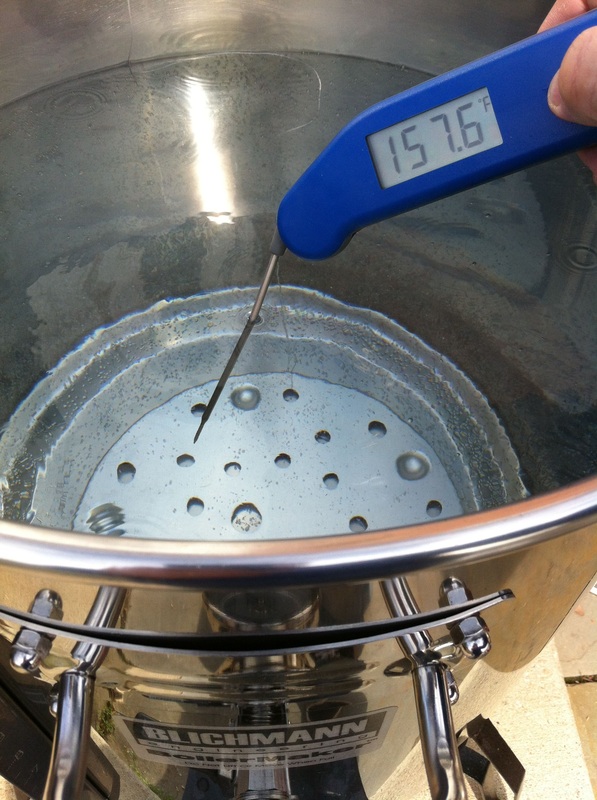
Pictured is a very accurate thermometer called a Thermapen. I can't recommend these enough. Although expensive, it will become a staple of your brewing equipment for many years.
Step 3
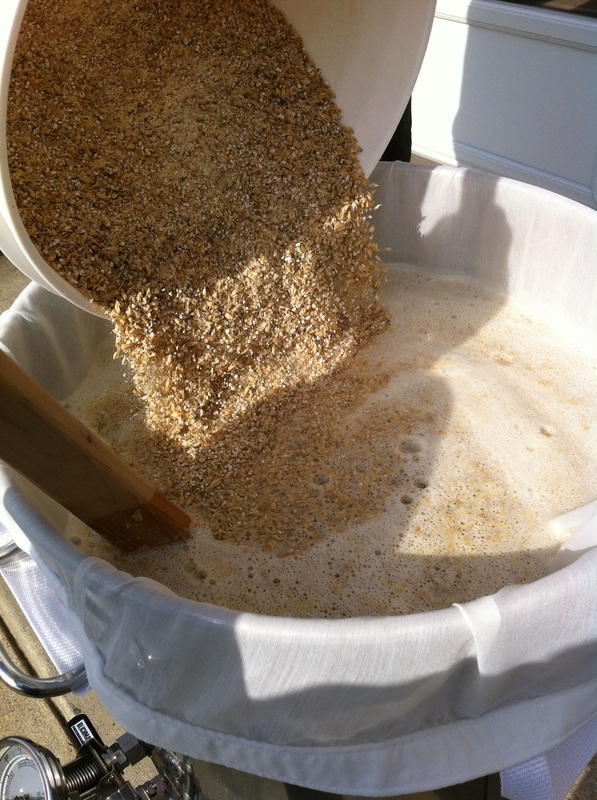
Check the temperature of the mash at the middle, sides, top and bottom and be sure all readings are close to the target temperature.
Place the lid on the kettle and wrap a towel around the opening to provide extra insulation. When brewing outside in a colder climate, consider insulating the kettle with a jacket, sleeping bag, or some other method. Set a timer for your mash.
Step 4
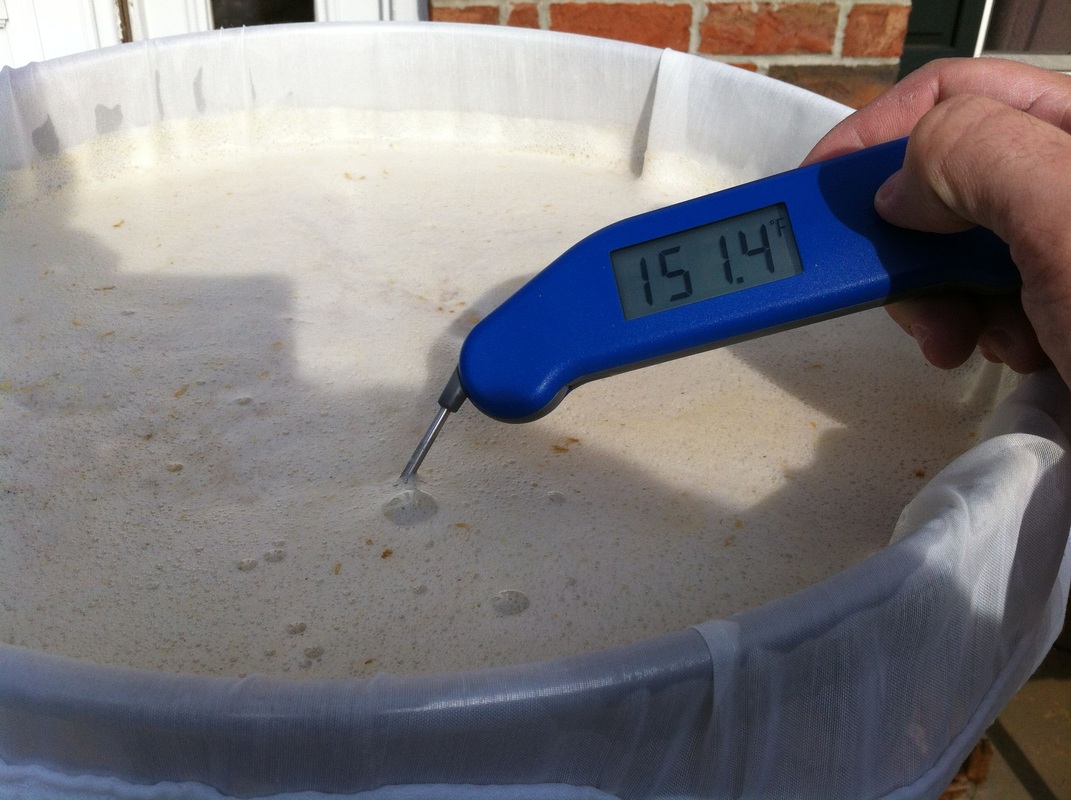
Remember to stir.
Step 5
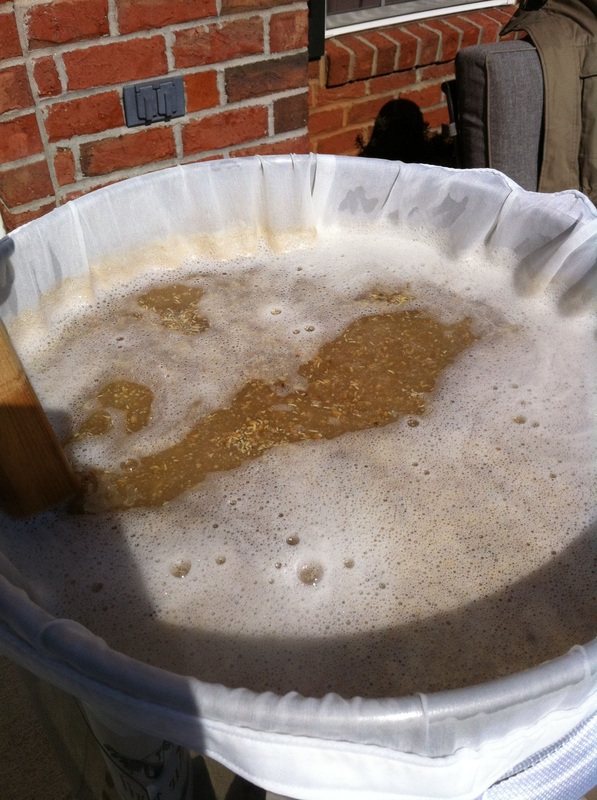
Step 6
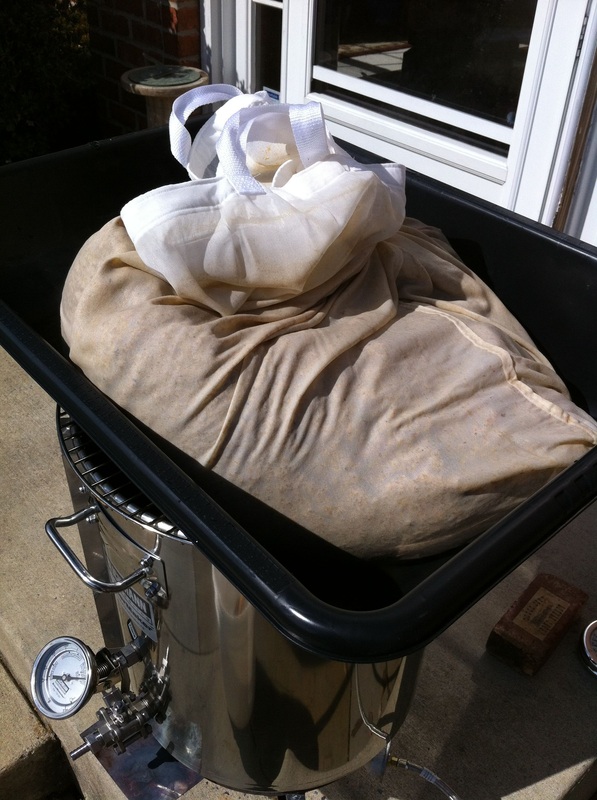
If you are using first wort hops, they can be added to the wort while the bag is draining.
Step 7
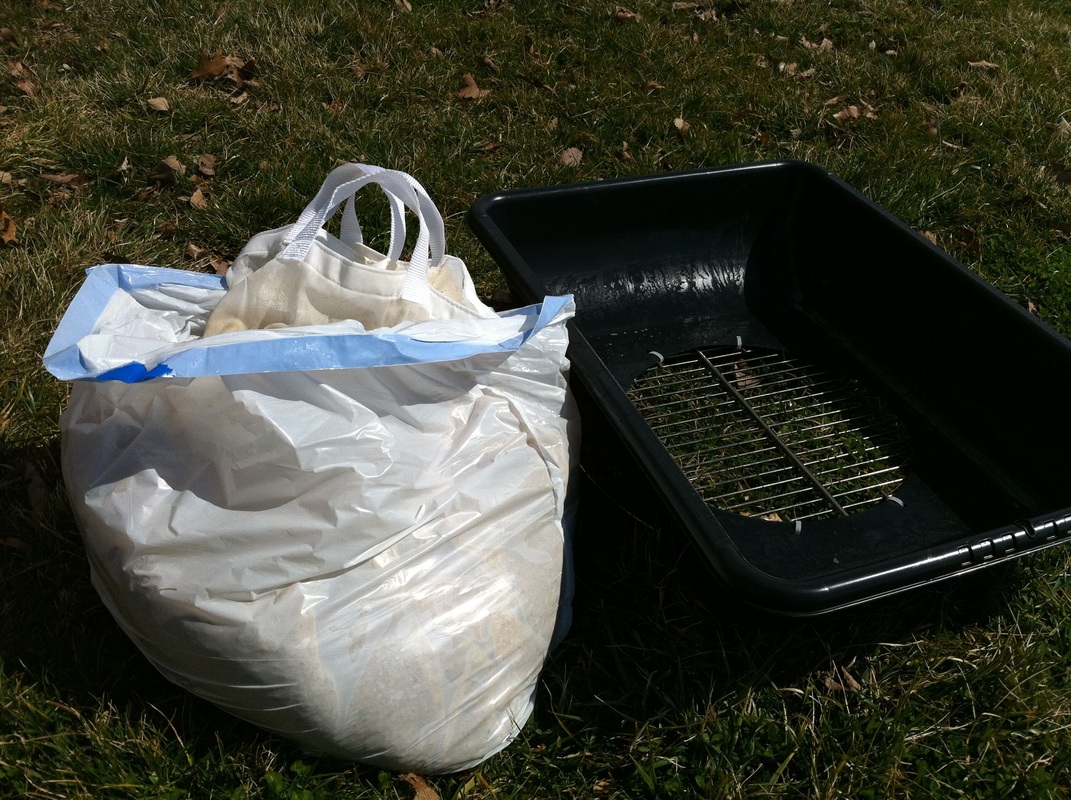
Step 8
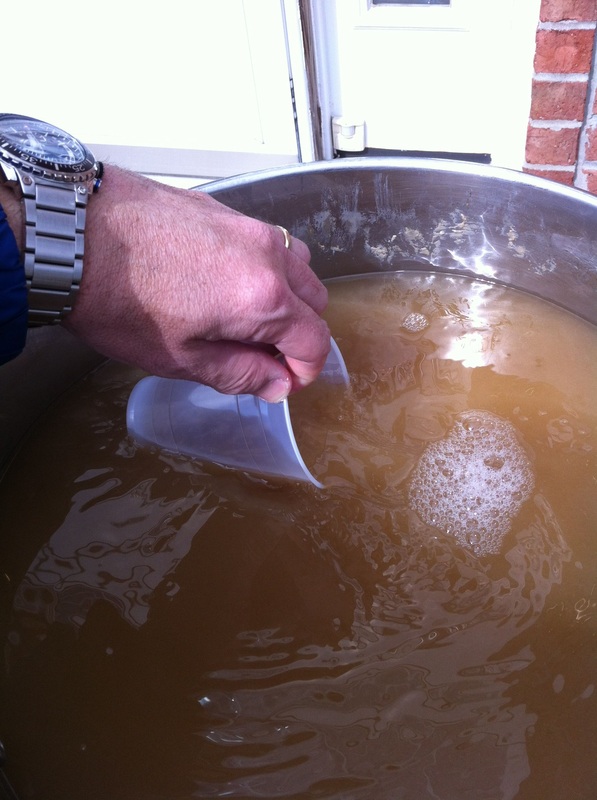
Step 9
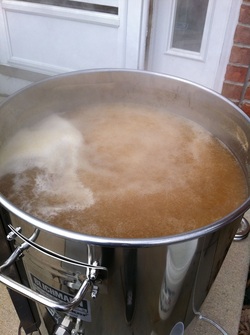
If you want to see the full process, check out our full walkthroughs:
tknice's typical all-grain BIAB brewday
scoundrel's typical all-grain BIAB brewday [Back To Blog]