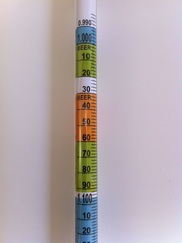
Another important reason to know where your beer "finished" is that any sugar left behind will contribute to the flavor profile and may or may not be desirable depending on the style you are brewing. The best way I've found to insure it finishes where you want is to pitch the right amount of yeast.
There are a few different ways to take a hydrometer reading and they all involve floating the hydrometer in beer. This guide will focus on obtaining the FG and show you a nice trick using a beer/wine thief to do it. I should mention however that my preference is NOT to open the fermenter unless it is absolutely necessary which leaves two options that I know of. The first is to use a satellite container (usually a beer bottle) with a sample taken after the yeast was pitched. You can put a small paper towel in the top to keep bugs out and place it close to the main fermenter--just be sure to pour enough to fill your hydrometer container when it comes time to take a reading. Some people say satellites do not represent how the main beer will finish, but I have not found this to be the case. Our satellites are always within a point of the reading taken from the carboys.
My favorite way to take a final gravity reading is described at the end of our Rack Beer to a Keg guide. This sample comes from the the last liter of racked beer that will be quick-carbonated for early tasting. [Read More]